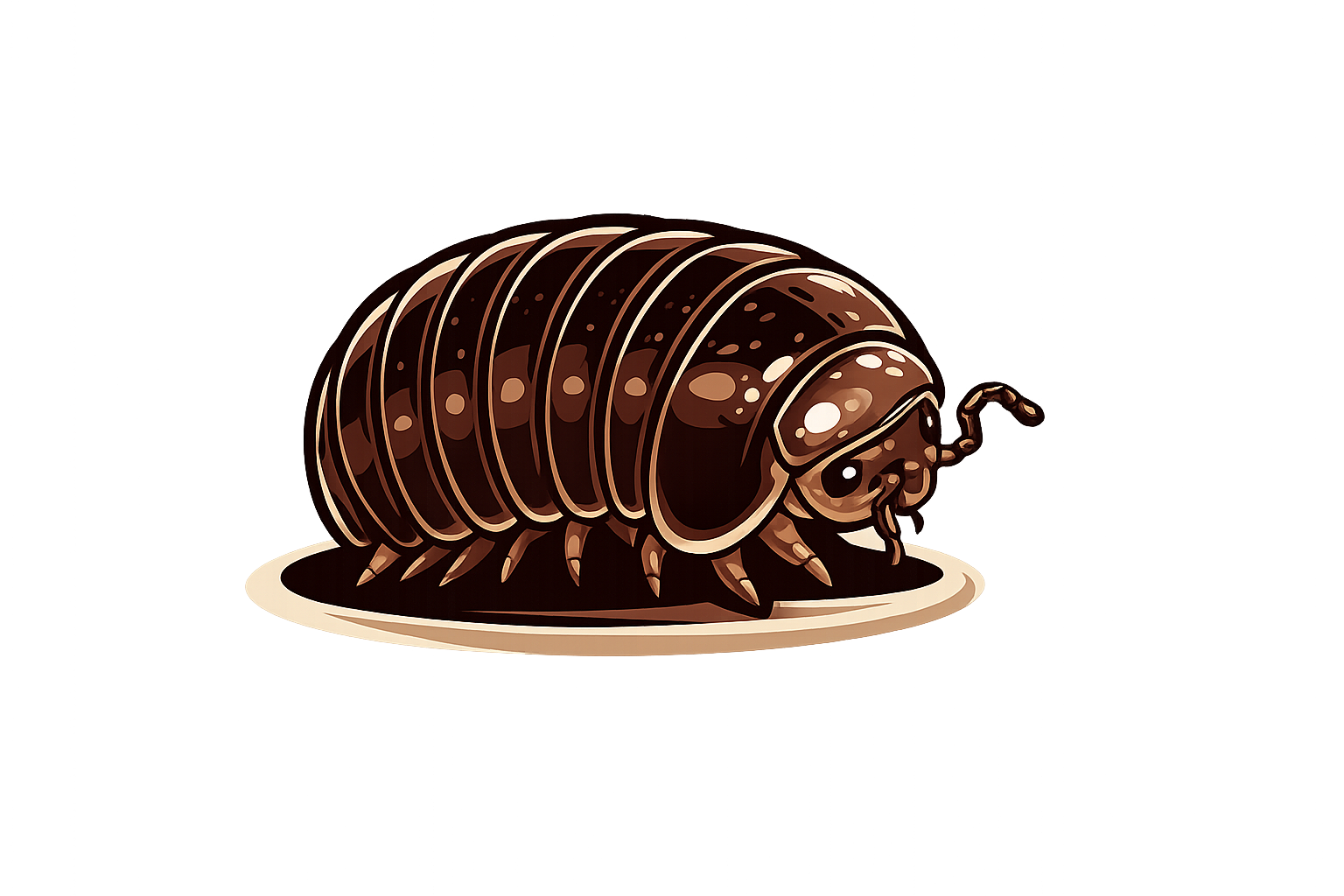
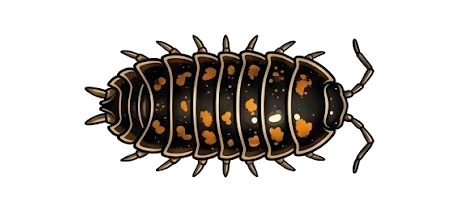
Northern pill millipedes — armed with the most potent alkaloids in Diplopoda
Unlike the strictly Gondwanan giant pill millipedes (Sphaerotheriida), Glomerida occupies a predominantly Holarctic and Southeast Asian distribution — one of the broadest biogeographic ranges of any millipede order. They thrive across Europe, North Africa, the Caucasus, Southeast Asia, and the Americas from California south to Guatemala.
Notably absent from sub-Saharan Africa, South America, and Australasia, their range reflects dispersal across once-contiguous Laurasian landmasses — the mirror image of Sphaerotheriida's Gondwanan heritage.
Holarctic Distribution
The Four Families
Compact, smooth, and resilient — the glomeridan body is a miniaturized precision instrument. At 5 to 20 mm, these are the smaller of the two living pill millipede orders, but what they lack in size they more than compensate for in biochemical sophistication.
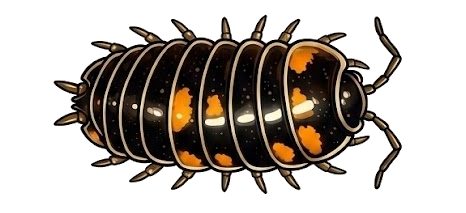
The hallmark apomorphy of Glomerida — setting them apart from every other pill millipede — is their possession of highly developed exocrine defensive glands opening through mid-dorsal ozopores. When threatened, they deploy one of the most pharmacologically sophisticated defensive cocktails known in Diplopoda.
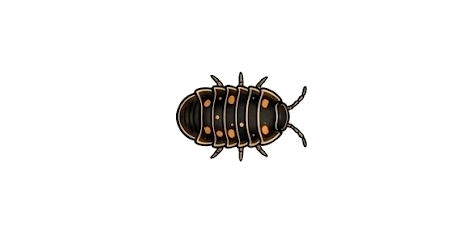
Dorsal view · 8 mid-dorsal ozopore gland openings highlighted · Click to trigger secretion
Each dot = 2 weeks · Full recharge requires 4+ months — one of the highest metabolic costs of any arthropod chemical defense
The Quinazolinone Arsenal
Quinazolinone Core Structure
Documented Predator Effects
Glomerida shares the defining superorder capability of perfect conglobation — but the micro-anatomy of how their sphere is held together differs fundamentally from their southern counterparts. Without locking carinae, they rely on tight tergite-margin nesting and, crucially, chemical supplementation.
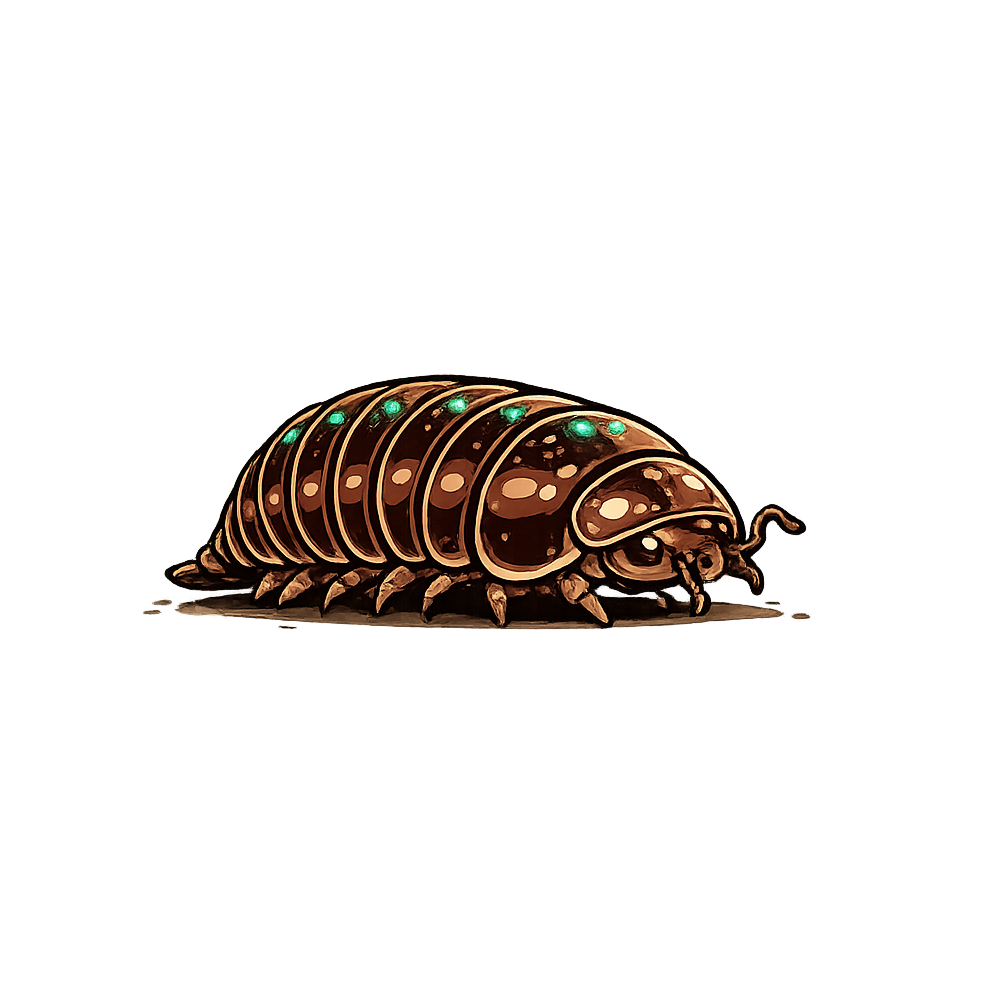
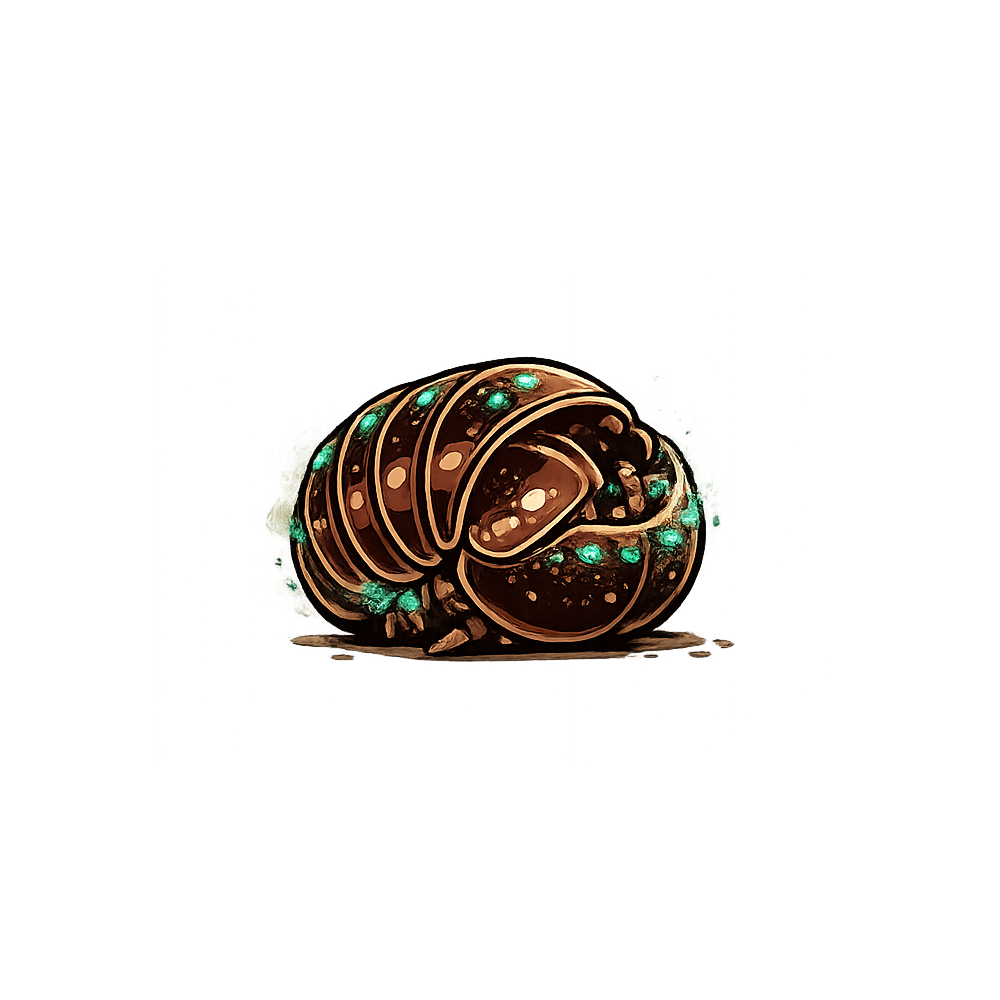
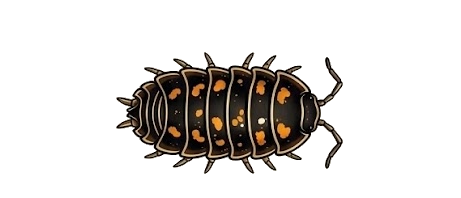
The animal moves via metachronal leg waves. The teal ozopore dots along the dorsal midline are visible in life — slightly raised, often with a moisture sheen. Antennae and Tömösváry organs sample for humidity and chemical cues.
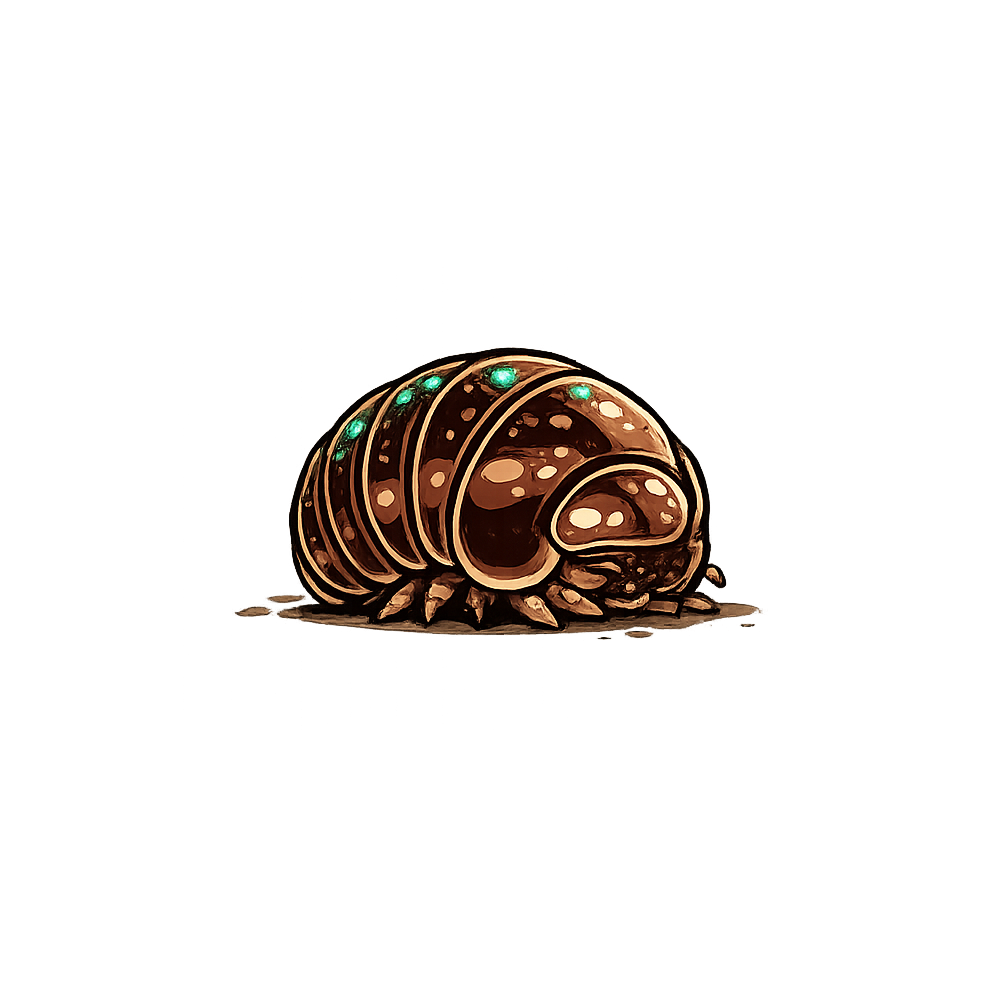
On threat detection, longitudinal muscles fire simultaneously. The body flexes; head and antennae tuck inward; the anal shield begins rotating toward the thoracic shield. The ozopores may pre-prime at this stage.
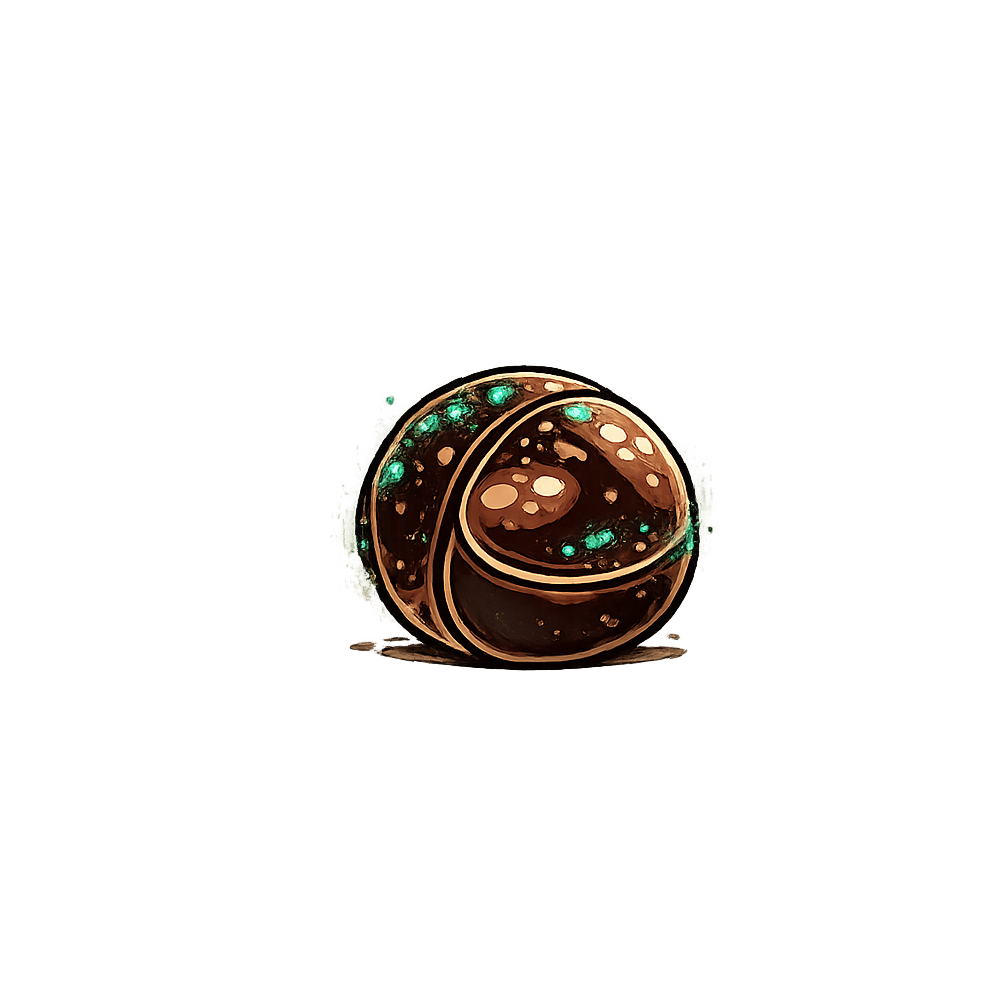
As conglobation proceeds, the ozopores can discharge — coating the exterior of the forming sphere in alkaloids. Any predator attempting to bite through the rolling form contacts glomerin directly.
Tergite margins nest snugly behind the thoracic shield. Unlike Sphaerotheriida, there are no interlocking carinae — the sphere is held by muscular tension and tergite geometry. The alkaloid coating provides additional protection.
Glomeridan mating bypasses the acoustic stridulation of Sphaerotheriida entirely. Instead, courtship is driven by chemical pheromone signaling and gentle tactile palpation — a quieter, more intimate biochemical dialogue rather than an engineered vibration broadcast.
Once a male encounters a female, he must coax her out of her enrolled defensive posture. When she uncoils, his specialized posterior telopods take over — physically grasping her anterior segments while he extracts a spermatophore for transfer.
While Sphaerotheriida males sing females open with species-specific vibrations (a "harp and washboard" system), Glomerida males release contact and proximity pheromones detected by the female's Tömösváry organs and antennae.
This chemical courtship signal is invisible, species-specific, and — fascinatingly — operates through the same biochemical infrastructure that underlies the defensive alkaloid system, hinting at a shared exocrine gland ancestry.
Simulated pheromone diffusion gradient — male to female
Mating Sequence
Any male approach triggers the female's defensive sphere reflex. The male must overcome this without force — Glomerida males, lacking the stridulatory harp of giant pill millipedes, rely on pheromone release to signal safety.
The male releases species-specific pheromones detected by her Tömösváry organs and antennal chemoreceptors. He simultaneously performs gentle tactile palpation of the sphere's exterior with his antennae and front legs.
Upon recognizing the correct species pheromone signature, the female slowly unrolls — chemical consent encoded in molecular recognition rather than acoustic frequency.
The male's modified posterior telopods (the 19th leg pair, or both 18th and 19th in Glomeridellidae) firmly clasp the female's anterior segments — securing the mating position against her potential re-rolling.
A spermatophore is ejected from penes located behind the 2nd leg pair and passed backward via legs to the female's vulvae — the same indirect transfer mechanism shared across Oniscomorpha.
Glomeridans are slow-growing, long-lived detritivores of damp woodland floors — ecologically indispensable engineers of humus and calcium cycles. Their development is among the most prolonged of any small arthropod: females of Glomeris marginata may live over a decade before reproducing.
Hemianamorphosis — Developmental Stages
After reaching the adult segment count, molting continues throughout life — but no further segments are added. Sexual maturity: males ~3 years, females ~4 years.
Glomeridans inhabit damp leaf litter, decaying wood, and calcareous soils — processing immense volumes of decaying plant matter, fungi, and detritus. Specialized hindgut microbiota digest otherwise refractory compounds including lignin and cellulose.
Their calcium-rich exoskeletons and high defecation rates make glomeridans essential engineers of forest calcium cycling. They selectively consume calcium-rich substrates, concentrate the mineral through gut processing, and release it in bioavailable castings for plant uptake.
Most Glomerida species show strong preference for calcareous substrates — chalk grasslands, limestone woodlands, and calcium-rich forest soils. This substrate specificity makes them sensitive bioindicators of soil chemistry and pH, declining rapidly when acidification occurs.
Multiple lineages within Trachysphaeridae have independently colonised cave systems — troglobitic glomeridans that are completely blind (vestigial ocelli), depigmented, and often exhibit elongated appendages. These cave forms represent some of the most extreme morphological modifications in the order.
Like all millipedes, locomotion proceeds via a posterior-to-anterior metachronal leg wave. Glomerida's compact body and relatively modest leg count (17–19 pairs) produces a slower, more deliberate gait suited to navigating dense leaf litter and decaying wood microhabitats.
The Tömösváry organs function as precise hygrometers — glomeridans will migrate vertically in the soil column to track optimal moisture levels. During dry spells, many species aggregate in logs and beneath bark, entering a quiescent state until rains return.
Unlike their Amynilyspedida ancestors preserved in large coal-swamp compressions, the Glomerida fossil record is dominated by exquisite amber inclusions — specimens frozen in tree resin, sometimes preserving soft-tissue details invisible in compression fossils. The emerging picture is one of remarkable morphological conservatism: the modern glomeridan body plan has changed little in over 100 million years.
Specimens of Glomeridella preserved in Burmese (Myanmar) amber represent some of the oldest confirmed Glomerida fossils. Dating to approximately 99–100 million years ago, these inclusions reveal that the modern glomeridan morphology — including the characteristic tergite arrangement and reduction to 12 segments — was already fully established by the mid-Cretaceous.
The amber matrix often preserves the full three-dimensional form of the millipede, including antennal segmentation and, occasionally, details of the ocelli row. This provides direct evidence that the single-row ocellus pattern predates the dinosaur-bird transition.
"The Burmese amber specimens confirm that Glomerida's defining body plan is a Mesozoic innovation — and has remained essentially frozen for 100 million years."
Eocene Baltic amber — the world's most species-rich amber deposit — has yielded multiple glomeridan inclusions representing species closely related to the modern European fauna. Some specimens are so well preserved that chaetotaxy (bristle patterns) can be mapped and compared directly with living species.
These Eocene specimens confirm the mid-dorsal ozopore positions in their exact modern configuration — providing fossil evidence that the unique chemical defense gland geometry was already fixed by the Eocene, and strongly suggesting the alkaloid production biochemistry has been conserved since at least the Mesozoic.
Functional implication: the glomerin alkaloids themselves may have remained pharmacologically consistent for tens of millions of years — one of the oldest documented arthropod chemical defense systems.
Independent Evolution of Mid-Dorsal Glands
The fossil record confirms what morphological analysis long suggested: Glomerida's mid-dorsal repugnatorial glands evolved entirely independently from the lateral defensive glands of the "worm-like" Helminthomorpha millipedes. The two lineages converged on chemical defense through completely different anatomical routes — one of the most striking examples of parallel evolution in myriapod biology. The gland position (dorsal midline vs. lateral flank) and the alkaloid chemistry (quinazolinones vs. benzoquinones) differ entirely.